
National Drunk & Drugged Driving Prevention Month | December 2025
Federal campaign • Young drivers

National Drunk & Drugged Driving Prevention Month December 2025

December hits different. Parties, late nights, and long drives. But one reckless move behind the wheel can end everything—fast. This page is your no-fluff guide to staying alive, staying free, and keeping your crew safe.
Gen Z focus
Federal guidance first
Real stats, real consequences
Zero Cap Every impaired driving crash is 100% preventable. This isn’t a lecture—this is a life cheat code for you and your friends.
National Drunk and Drugged Driving Prevention Month December 2025 Campaign
Official Holiday Crackdown
National Drunk & Drugged Driving Prevention Month
Federal campaigns, extra patrols, and zero tolerance for impaired driving all December long.
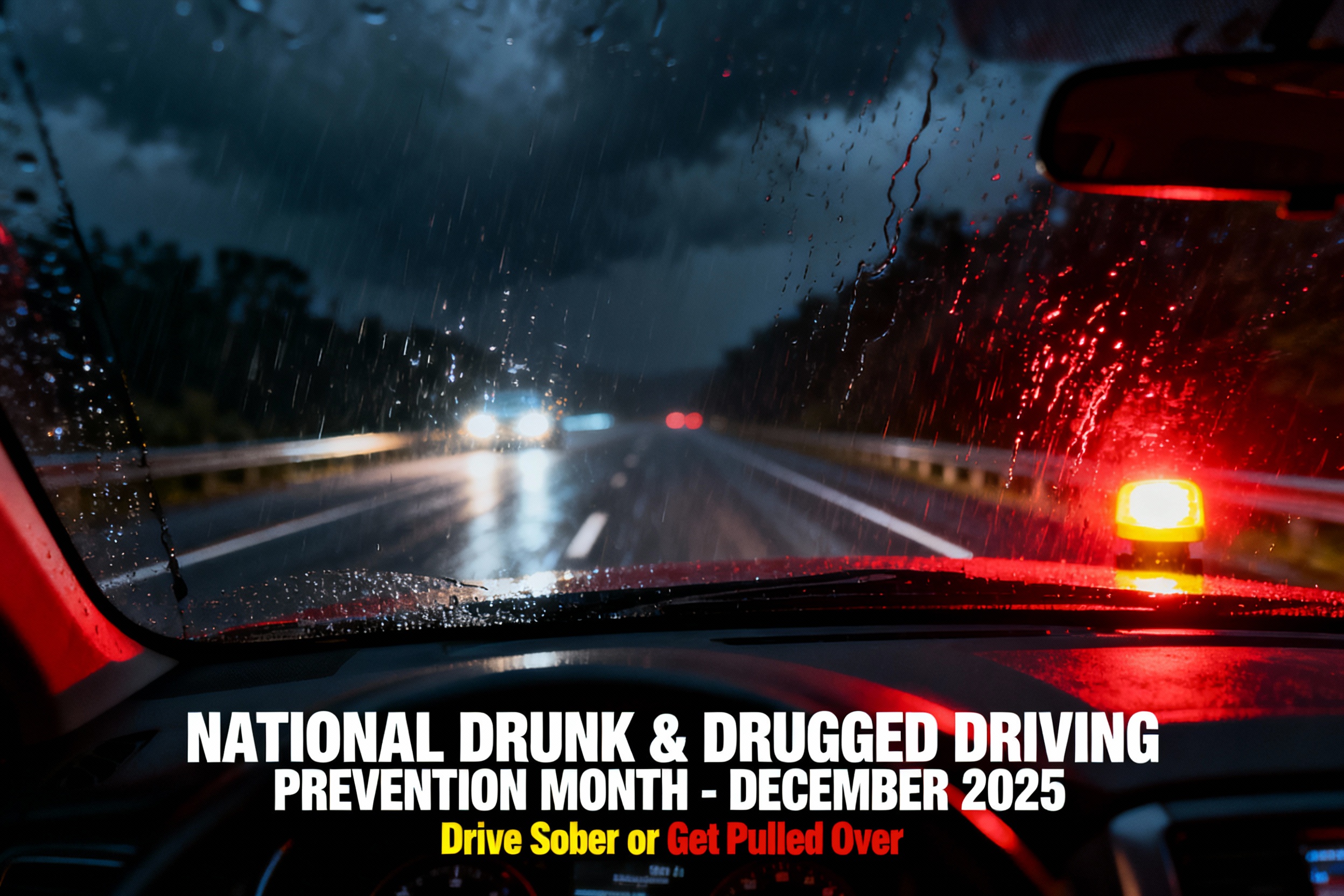
Drive Sober or Get Pulled Over
High-risk season • Extra enforcement
December 2025
Law enforcement, feds, and communities are all watching the roads. Don’t be the main character in a crash headline.
100% preventable
The reality check

Numbers that should stop you in your tracks

These aren’t just stats—they’re people whose stories ended on the road. The federal data behind December’s crackdown is brutal for a reason.

Alcohol-impaired deaths (2023)
12,429
People killed in crashes where the driver was alcohol-impaired in 2023 across the U.S.
That’s 12,429 lives gone for nothing.
Daily impact
34
On average, 34 people die every single day from alcohol-impaired driving crashes.
Every 42 minutes, someone’s story ends.
December spike
1,062
People killed in drunk driving crashes in December 2022 alone during the holidays.
Holidays shouldn’t end in funerals.
Cannabis & driving
22.3%
Of Americans used marijuana in the past year—many wrongly assume driving high is “not that bad.”
Science says otherwise.
Driving after using
84%
Of cannabis users admit driving within 8 hours of using—over half within one hour.
Feeling “chill” ≠ safe to drive.
Young drivers at risk
31%
Of drugged drivers are 18–25. Your age group is literally the most at risk.
This is about you and your crew.
Federal guidance first

What the U.S. government needs you to know

This isn’t just parent energy—it’s straight from federal agencies like NHTSA, SAMHSA, NIDA, and CDC, whose job is literally to keep you alive.

NHTSA • U.S. Department of Transportation
NHTSA – Risky Driving & Impaired Driving

NHTSA (National Highway Traffic Safety Administration) leads national campaigns like “Drive Sober or Get Pulled Over” and “If You Feel Different, You Drive Different.” Their whole message? Impaired is impaired—no excuses.

SAMHSA • U.S. Health & Human Services
SAMHSA National Helpline

Struggling with alcohol, weed, pills, or other substances? SAMHSA’s helpline gives you free, confidential support 24/7—no judgment, no public record, just help.

Call 1-800-662-4357
NIDA • National Institutes of Health
NIDA – Drugged Driving Facts

NIDA explains exactly how weed, pills, and other drugs mess with your reaction time, focus, and decision-making—even when you think you’re “fine.”

CDC • Injury Center
CDC – Impaired Driving Facts & Strategies

The CDC’s impaired driving hub lays out the data, state laws, and proven strategies to cut deaths on the road. It’s like a receipts page for why this month matters.

What “impaired” really means

It’s not just about being “drunk”

Federal agencies are crystal clear: if something changes how you think, react, or move, you have no business driving. It’s that simple.
Alcohol
The most common cause of impaired crashes. Even “just a couple” slows reaction time and wrecks judgment.
Legal ≠ safe behind the wheel
Cannabis / Weed
Slows reaction time, affects tracking, and changes how you judge distance and speed—even when you feel “chill.”
High is still impaired
Prescription Meds
ADHD meds, painkillers, anti-anxiety meds, and more can all hit your focus, coordination, and reaction time.
Check the warning labels
OTC Meds
“Regular” stuff like cold medicines, allergy meds, and sleep aids can make you drowsy or dizzy.
Drowsy = dangerous
Illegal Drugs
Coke, heroin, molly, and other drugs can cause extreme risk-taking, blackouts, or slowed response.
Double risk: law + safety
Exhaustion / All-nighters
Being severely tired can mimic being drunk. Microsleeps at the wheel turn highways into warzones.
Sleep or don’t drive
Dashboard perspective showing dangerous driving situation with oncoming traffic
The reality behind the wheel: at highway speeds, one distracted or impaired moment can flip your whole life in a second.
How not to be the headline

Practical prevention strategies that actually work

This isn’t about vibes—it’s about systems. Build these into your plans, and suddenly staying safe becomes the default, not the exception.

Plan ahead, every single time
Decide your ride home before anything starts. Designated sober driver, Uber, Lyft, taxi, or public transit—locked in ahead of time so you’re not “deciding” while buzzed.
Future you will thank you
Use tech like a safety net
Keep rideshare apps installed and updated. Save taxi numbers. Drop location in group chats. Make it easy to tap out of a bad plan.
One tap beats one crash
Know your limits (and stay under)
There is no “safe” amount of alcohol or drugs before driving. If you’ve used anything that hits your brain, you’re not driving. Period.
“I’m good” isn’t good enough
Never mix substances
Alcohol + weed + meds = massively unpredictable. The impairment stacks, and your reaction time and judgment fall off a cliff.
Combo = chaos
Host responsibilities
If you’re hosting, you’re low-key the safety officer. Offer non-alcoholic drinks, keep food flowing, check on people, and take keys if someone is clearly not okay to drive.
Real friends protect each other
Guest responsibilities
Eat before and during, stay with your group, and watch out for that one friend about to make a terrible call. Never ride with an impaired driver—even if it’s awkward.
Awkward now > tragedy later
When teens and young adults lead

Youth programs that actually speak your language

Peer-to-peer hits different. When safety messages come from people your age—not just parents, teachers, or cops—they land harder.
SADD • Students Against Destructive Decisions
16,000+ chapters and counting
SADD started after students died in a drunk driving crash—and turned into a nationwide movement. Chapters run student-led campaigns, host events, and push “Contract for Life” agreements between teens and parents: call for help, no judgment.
Real talk • Real impact
School & Community Programs
“Every 15 Minutes” & more
Programs like Every 15 Minutes use mock crashes, real emergency responders, and heavy storytelling to show what impaired driving really does. Intense? Yes. Effective? Absolutely.
Sometimes reality needs to shock
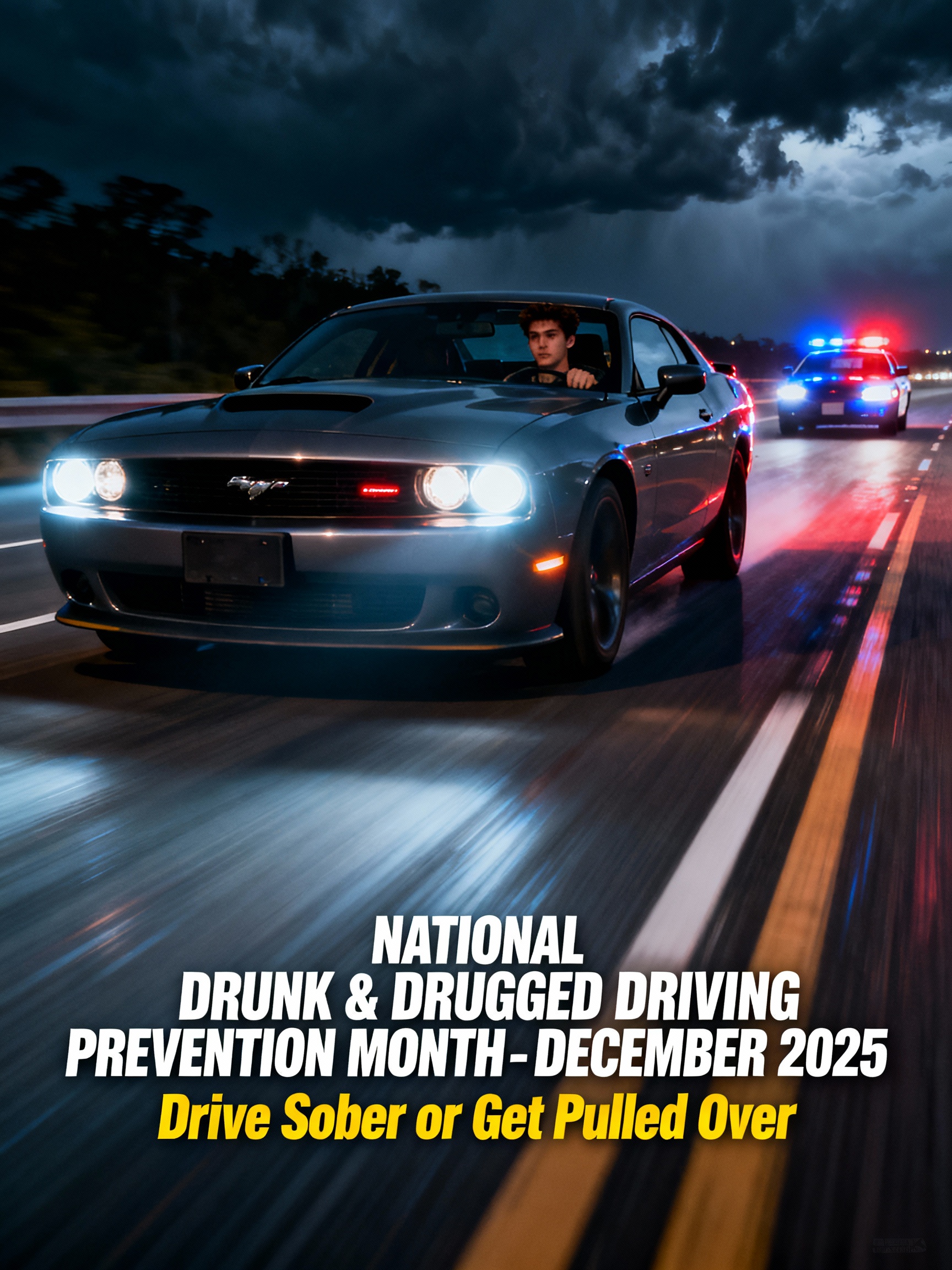
Modern muscle car speeding with police pursuit in background
December 2025: enforcement is not a game. Extra patrols, checkpoints, and campaigns mean more eyes on the roads—and zero patience for impaired driving.
December 2025 energy

What to expect on the roads this month

Federal and local agencies go full send in December—because history shows this is when crashes, arrests, and fatalities spike. Here’s what’s happening while you’re out.

“Drive Sober or Get Pulled Over” & “If You Feel Different…”

NHTSA’s national campaigns run hard through the holidays. Behind the ads are increased patrols, sobriety checkpoints, and enhanced focus on impaired driving, especially late nights and weekends.

  • More police units on highways and near nightlife areas.
  • Random sobriety checkpoints with zero tolerance for impaired driving.
  • Public awareness blasts on social, TV, and streaming to remind you—cops are looking for impaired drivers.

Translation: if you drive impaired, odds are much higher you will get caught. Best move? Don’t give them a reason to stop you in the first place.

How not to become a statistic

Make smart the default, not the exception

You don’t need to be perfect. You just need a system that makes the safe choice the easy choice, every time things get chaotic.

Before you go out
Lock in your ride early
Decide who’s the sober driver, or commit as a group to rideshare or staying over. No “we’ll figure it out later”—that’s when bad decisions sneak in.
While you’re out
Check in with your people
If someone is clearly not okay to drive, step in. Take keys, call a ride, or get an adult you trust involved. Annoying in the moment, life-saving in reality.
If plans change
Stay flexible, not stubborn
Missed the last train? Ride bailed? That’s not a sign to drive intoxicated. Crash on a couch, call family, or grab a rideshare. Pride doesn’t drive safely—you do.
If you’re struggling
Ask for help early
If partying is starting to feel like a habit you can’t control, reach out. SAMHSA, MADD, and others exist so you don’t have to figure it out alone.
From tragedy to movement

MADD: The parents who refused to stay quiet

Mothers Against Drunk Driving started with one mom, one daughter, and one repeat drunk driver. Today, they’re a national force backing victims and pushing prevention.

Why MADD still matters in 2025

Founded in 1981 after 13-year-old Cari Lightner was killed by a repeat drunk driver, MADD has spent decades changing laws, supporting victims, and making impaired driving socially unacceptable.

  • Helped raise the minimum drinking age to 21 nationwide.
  • Pushed for tougher DUI laws, ignition interlocks, and license penalties.
  • Runs the Project Red Ribbon campaign—tying a ribbon on your car to show you’re committed to sober driving.
  • Offers support services, victim advocacy, and youth programs.
Save these, share these

Key resources & helplines you should keep handy

Screenshot this section. Drop it in your group chat. You might not need it today, but someone you love might need it tomorrow.

Federal & national resources

These links and numbers are here for you, your friends, and your family—no matter how heavy things feel right now.

24/7 SAMHSA Helpline

If you or someone you care about is struggling with alcohol, drugs, or mental health, you don’t have to figure it out alone. Help is one call away.

Call 1-800-662-4357 (SAMHSA)

Free • Confidential • 24/7 • Available in English & Spanish.

Please Rate this page